
Whenever I think of the Andes, that line from In Search of the Castaways, “Did you ever see such beautiful Andes Mountains? Let’s climb!” instantly pops into my head. I’ve always found it hilarious that the French dude, Maurice Chevalier, was singing the mountains’ praises while they were in such a dangerous, unforgiving environment. The Andes, along with regions of Southeast Asia and parts of India, serve as examples of where hot peppers flourish in challenging soils and climates. Even within the United States, we see this intensity in peppers like the Carolina Reaper. To visualize this, think of the opening scene of the movie Wild, its vast, arid, and unforgiving stretches of the Pacific Crest Trail near the Mexico-California border happen to be the exact environment where these intense peppers thrive.
And so, the journey begins…Our first depot stop: Korea.
Unlike the unforgiving mountain ranges one might expect, South Korea, specifically Jeju Island is a haven for agriculture. Jeju is a hub for eco-farming, yielding impressive wines, melons and a vast array of Brassicaceae, like kale, broccoli and cauliflower. And, most importantly, it is home to the Korean chili pepper: Gochugaru. With an average Scoville heat unit (SHU) of 8,000, it offers a distinct, mild, and approachable heat.
While the ag hooked me, my true introduction to Korean cuisine was through K-Dramas. (Yes, really). In my early 20s, I was an avid watcher on DramaFever. My motive? Survival. I was at a stage in my martial arts training where speaking the language was expected; if I couldn’t, I was doing 50 push-ups. Naturally, I chose the path of least resistance…and entertainment. I specifically sought out dramas where food was the central theme, alongside the chaebol culture, and the displays of wealth not usually seen in American television. I soon felt an urge to try some of these dishes, but I couldn’t simply walk into a Korean BBQ restaurant due to my religious dietary laws. And so began my self-taught kitchen experiments.
And just in case you were wondering: no, I don’t watch K-Dramas anymore. I’ve since pivoted to C-Dramas on Viki. And no, no push-ups are involved. I’m doing this purely to test my Chinese for fun!
Most of my experiments revolve around lacto-fermentation, a process where beneficial bacteria break down sugars in ingredients to produce lactic acid. This byproduct is what gives fermented foods their characteristic acidity, savory depth, and probiotic profile. Humans have practiced fermentation for centuries, from early sourdough traditions dating back to BCE to the documented origins of kimchi in the 1200s and the appearance of sauerkraut in Europe between the 13th and 15th centuries.
We didn’t understand the underlying science until the 19th century. It took Louis Pasteur, the father of microbiology, to finally demystify the process.
However, lacto-fermentation requires diligence. Unlike baking, working with fresh vegetables carries a higher risk of cross-contamination. If equipment and produce are not properly sanitized, you risk the growth of harmful pathogens like Salmonella, E. coli, or Clostridium botulinum alongside the beneficial bacteria. Because these risks are serious, I prioritize creating a safe, controlled environment for my experiments. My approach often involves using specific catalysts to streamline the process, aiming to achieve the desired results while minimizing the window for unwanted bacterial growth.
Health and Biochemical Considerations: A Note on Science and Safety
Given my background, I approach fermentation with a focus on safety. Please note that while these methods are designed for controlled results, fermented foods can interact differently with specific physiological profiles.
If you are managing conditions such as psoriasis, CIRS, MCAS, or SIBO, are immunocompromised, or have active cancer, please consult your specialist if you are unsure how these dietary experiments might impact your specific health status.
While I am exploring tastants and scientific grey areas, this content is for educational purposes only and does not constitute medical advice or a clinical consultation.
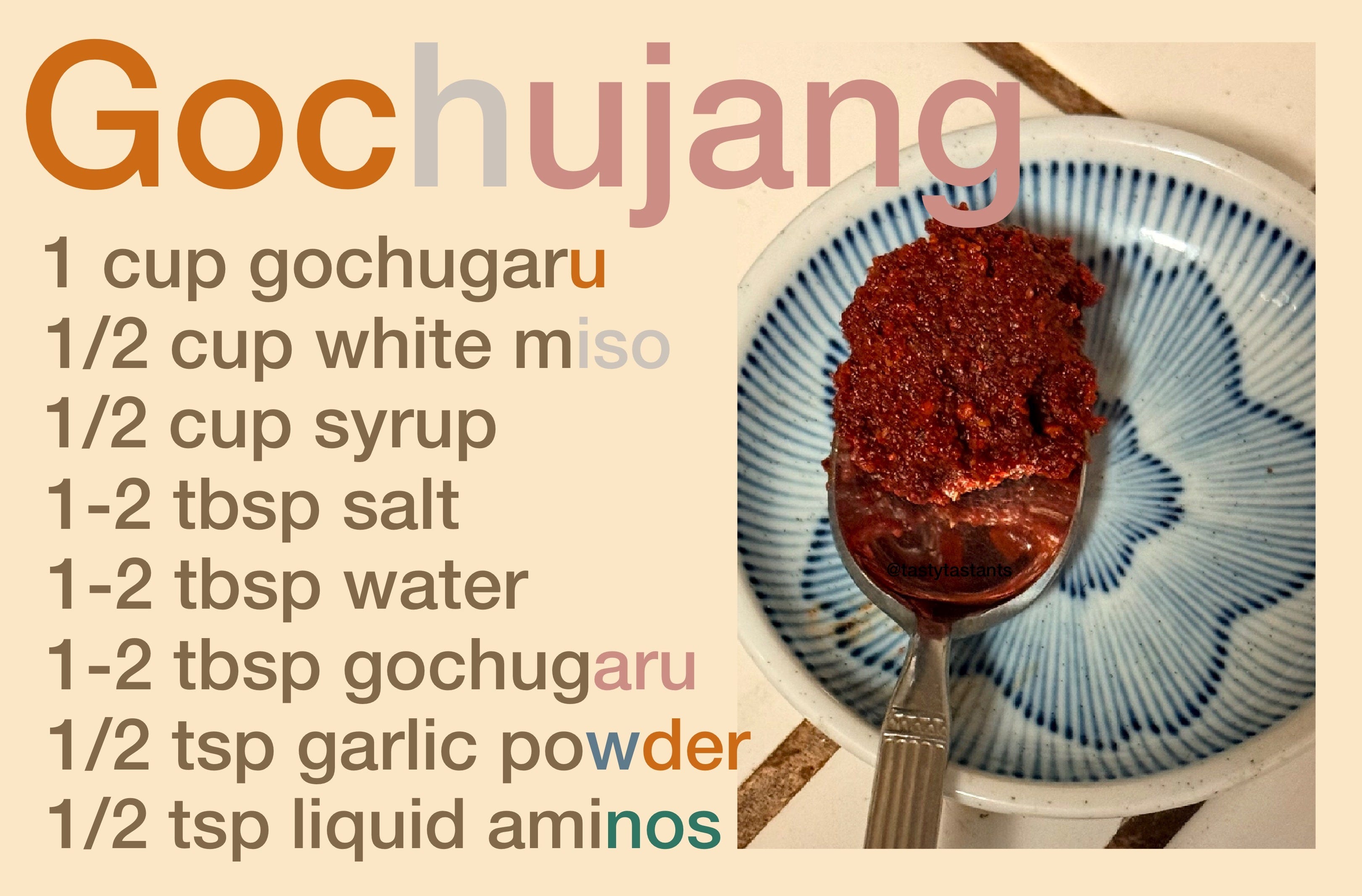
Gochujang (Korean Chili Paste)
Gochujang is a foundational condiment essential for jjigae and much of traditional Korean cuisine.
Ingredients
White Miso Paste
Syrup of Choice (see Notes below)
Korean Chili Flakes (Gochugaru)
Salt, garlic powder, and liquid aminos (to taste)
Water (1-2 tablespoons)
Instructions
Blend Base: In a mini food processor, combine the white miso paste and your chosen syrup until the mixture is smooth and glossy.
Process Flakes: Use a spice grinder to process the Korean chili flakes until they reach a fine powder consistency.
Create Paste: Combine the blended miso mixture and the chili powder in a bowl, stirring until a thick red paste forms.
Season: Add salt, garlic powder, and liquid aminos, adjusting to your preference. If you prefer more heat, add additional gochugaru.
Adjust Consistency: Add water one tablespoon at a time until the paste reaches your desired spreadable consistency.
Usage: You can use the paste immediately, or allow it to “ferment” in the fridge for 1-4 weeks to develop deeper flavor.
Notes on Sweeteners
The choice of syrup will significantly impact the flavor of your final paste.
Corn or Rice Syrup: These are the most traditional choices, providing a neutral sweetness that allows the heat of the chilis to shine.
Honey or Date Syrup: These will result in a significantly sweeter paste. The date syrup is exceptionally high in fructose and will produce a much more intense sweetness compared to honey.
Alternatives: Agave or liquid sweeteners like coconut sugar work well. If using monk fruit, ensure it is a pure liquid form without sugar alcohols, as sugar alcohols can inhibit healthy fermentation and lead to unwanted bacterial growth.